
Table of Contents
Every year, CES offers a preview of where technology is heading. CES 2026 was no exception. AI dominated product launches, keynotes, and demonstrations — from laptops and phones to enterprise software and silicon.
But for businesses, the most important takeaway from CES wasn’t a specific product. It was this: AI is moving from a selling point to background infrastructure.
That shift has major implications for how businesses should approach device strategy.
What CES 2026 Revealed About AI and Business Technology

At CES 2026, nearly every device announcement included some form of AI:
AI-enabled laptops and PCs
On-device AI processing
AI-driven productivity tools
Smarter enterprise platforms
Yet despite the volume of announcements, one pattern stood out.
Very few companies could clearly explain:
How much these AI features would improve productivity
Which use cases would become standard
How long today’s hardware would remain relevant
This is typical of technologies at an inflection point. What begins as a headline feature eventually becomes infrastructure — expected, embedded, and rarely marketed.
Why CES Highlights the Risk of Buying AI Hardware Too Early
Traditional device procurement relies on long ownership cycles:
Buy once
Use for years
Refresh on a fixed schedule
But CES 2026 showed how quickly AI capabilities are evolving. For businesses, buying AI devices too early can lead to:
High upfront capital expenditure
Devices that age faster than planned
Paying for features that don’t deliver meaningful value
Limited flexibility when standards and workloads change
This isn’t a failure of technology. It’s a mismatch between how devices are bought and how fast they evolve.
CES Signals a Shift From Features to Outcomes
One clear theme across CES 2026 was that companies are no longer selling individual features. They’re selling:
-
Faster performance
-
Better battery life
-
Smoother workflows
-
Less friction for users
In other words, outcomes over specifications. Business buyers think the same way.
They care less about whether a device “has AI” and more about whether it helps teams work better — reliably and cost-effectively.
What CES 2026 Means for Business Device Strategy
When technology is still evolving, flexibility becomes a strategic advantage.
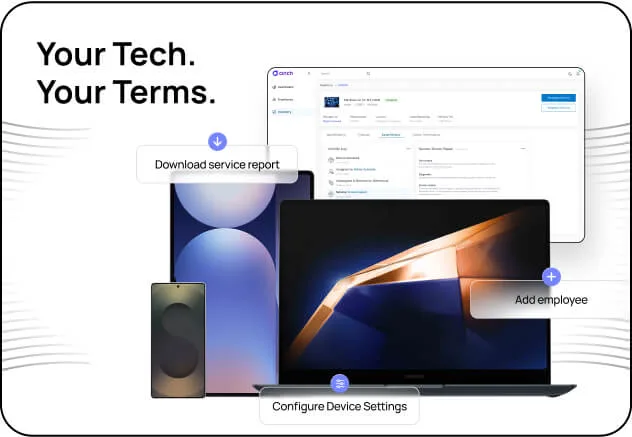
CES 2026 reinforced a simple truth: This is where Device-as-a-Service (DaaS) becomes relevant for businesses. Instead of buying devices outright, businesses subscribe to them — with full lifecycle management included.
How Device-as-a-Service Aligns With CES 2026 Trends
Cinch’s Device-as-a-Service model reflects how technology is changing:
Predictable monthly OpEx instead of large upfront costs
Devices delivered ready-to-use
Built-in support, maintenance, and protection
Flexibility to upgrade, swap, or return devices
End-to-end device lifecycle management
As AI capabilities mature, businesses can adjust their device strategy without being locked into outdated hardware.
Reducing Risk in a Fast-Moving Technology Cycle
CES highlights innovation. But innovation also introduces uncertainty. A subscription-based device model reduces the cost of being wrong:
No sunk cost in hardware that under-delivers
Easier refresh cycles
Less operational burden for IT teams
Instead of betting on one generation of devices, businesses can evolve alongside the technology.

The Key Business Takeaway From CES 2026
CES 2026 wasn’t about choosing the “best” AI device. It was about recognising how fast device value is changing. For businesses, the smarter move isn’t chasing every new launch — it’s building a device strategy that can adapt.
Cinch helps businesses do exactly that, by turning devices into a managed service, not a fixed asset. In a world shaped by CES-level innovation, device flexibility is no longer optional, it’s essential.